
Four worlds.
One productive ecosystem.
Nayokan is one institution working across the whole chain: it builds skills, turns them into production, connects enterprises to markets and innovation, mobilises capital and builds lasting productive assets. Four worlds carry that work, and each one hands on to the next.
Capability Production Markets Innovation Capital Productive Assets.
The pathway is linear on paper and cyclical in practice. Each stage feeds the next, and productive assets close the loop by resourcing further capability. Every world works at one or more of these stages.
- 01
Capability
Practical skills, entrepreneurial capacity and applied knowledge: the base of any productive economy.
VTI - 02
Production
Clusters and small enterprises that turn capability into organised, productive activity.
VTI · Startup Centre - 03
Markets
Access to customers, distribution and demand, locally and beyond, including hosting visitors and partners.
Startup Centre · Hospitality - 04
Innovation
Ideas and research moved through validation into commercial products with real market traction.
Startup Centre - 05
Capital
Patient, ecosystem-aligned capital for ventures with productive potential.
Venture Capital - 06
Productive Assets
Long-term physical and operational assets, such as hospitality, that generate lasting value.
Hospitality
What each world is, and where it leads.
VTI and the Startup Centre each have their own dedicated Nayokan site. Venture Capital and Hospitality are part of nayokan.org. All four share one institution and one system.
 Illustrative image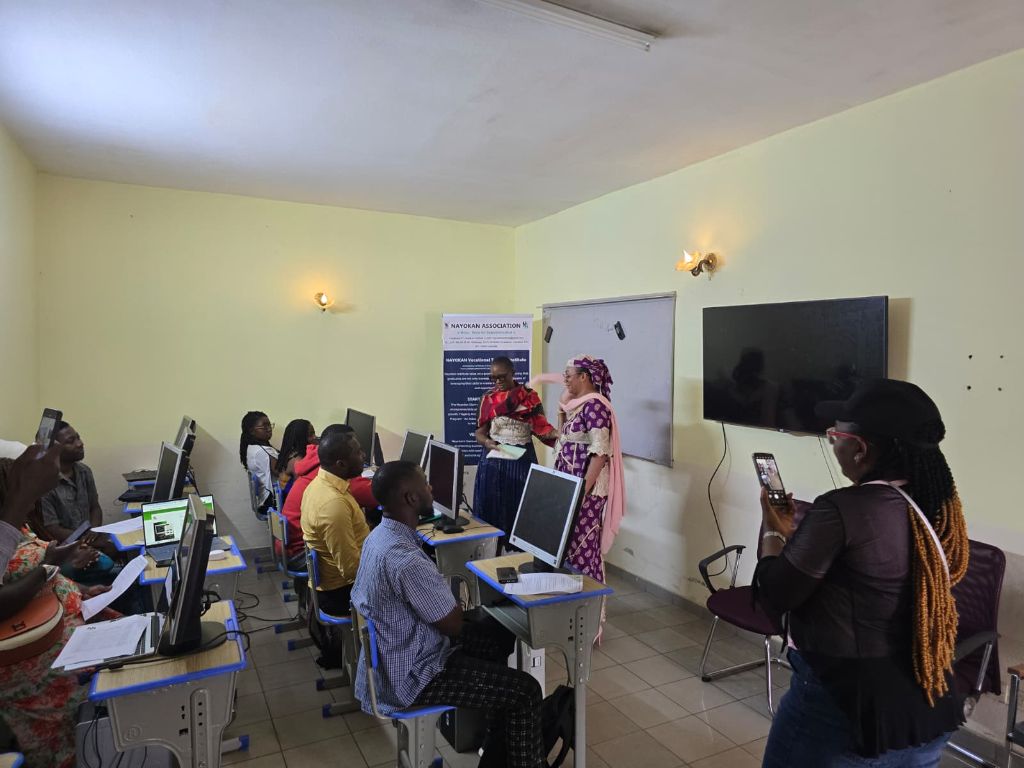
Practical skills. Productive people.
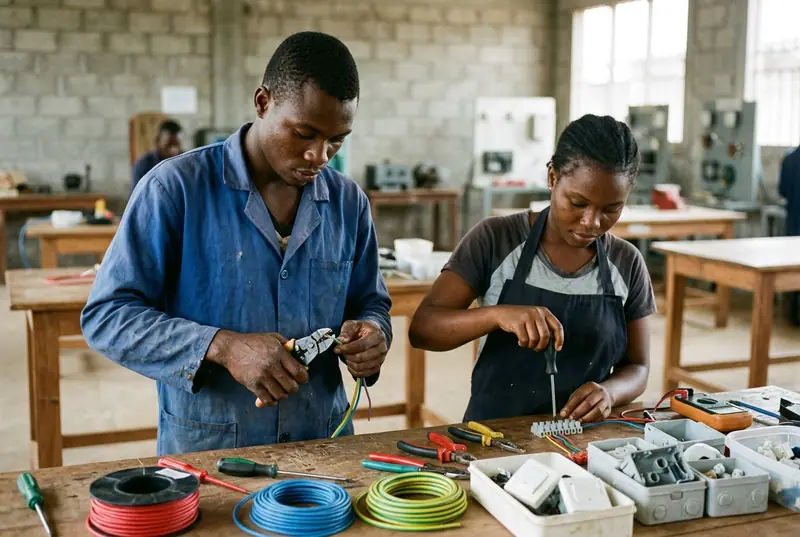
The Nayokan Vocational Training Institute develops practical, employable capability through a hands-on curriculum built around entrepreneurial clusters. Trainees learn by doing: in workshops, labs and production settings, not only in classrooms.
- Why it exists
- Skills alone are not enough. VTI graduates are trained to be capable as well as knowledgeable: to create job solutions and turn their skills into productive enterprise.
- Who it serves
- Young Cameroonians, school leavers and workers who want practical, employable skills.
- In the Nayokan System
- VTI is where the system starts. It builds capability, then organises graduates into clusters that turn skills into production.Stages 01–02 · Capability, Production
- Practical, workshop-based training
- Certification pathways
- Entrepreneurial clusters
- Production-oriented learning
 Illustrative image
Where research becomes enterprise.
The Nayokan Startup Centre connects university innovation, entrepreneurship and commercialization, moving ideas from research through validation into ventures with real market traction.
- Why it exists
- Promising research and ideas too often stop at the prototype. The Centre gives them a structured commercialization pathway: model, validate, commercialize, scale.
- Who it serves
- University researchers, students, innovators and early-stage founders.
- In the Nayokan System
- The Centre turns innovation into enterprise and connects it to markets. Ventures ready to grow move on to Nayokan Venture Capital.Stages 02–04 · Production, Markets, Innovation
- University innovation partnerships
- Commercialization programme
- Venture building and market validation
- Mentorship
- Opportunities and calls
 Illustrative image
Capital for productive enterprises.
Nayokan Venture Capital provides structured capital pathways for Cameroonian enterprises with productive potential, sourced from within the ecosystem and from selected institutional partnerships.
- Why it exists
- Capital works best when it arrives with capability. Nayokan VC is designed to invest alongside training, mentorship, market access and productive assets, never in isolation.
- Who it serves
- Founders of productive enterprises, and institutional investors, development finance partners and co-investors.
- In the Nayokan System
- Venture Capital mobilises capital for enterprises that come through the clusters and the Startup Centre, closing the gap between a validated venture and a growing one.Stage 05 · Capital
- Investment readiness
- Patient, stage-matched instruments
- Portfolio support
- Co-investment partnerships
 Illustrative image
Hospitality as productive infrastructure.
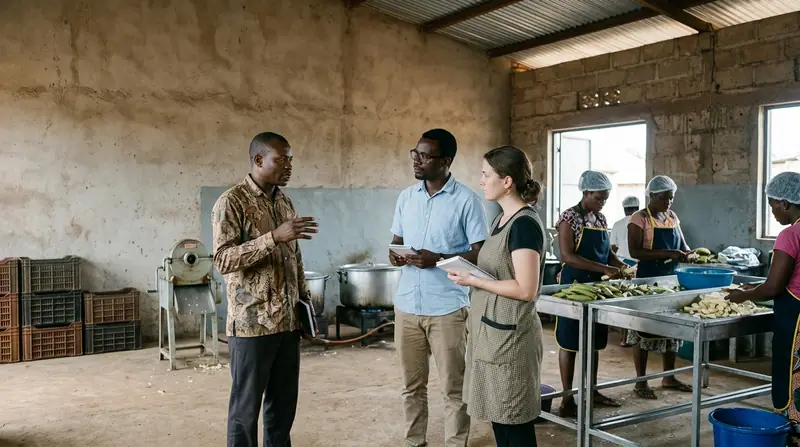
Nayokan Hospitality treats guesthouses and properties as productive assets: economic infrastructure rather than decoration, run to institutional standards.
- Why it exists
- A well-run guesthouse anchors an ecosystem. It hosts visitors, investors, researchers and partners, and returns value to Nayokan's wider work.
- Who it serves
- Visiting partners and delegations, researchers, investors and long-stay guests.
- In the Nayokan System
- Hospitality creates demand by hosting the people the ecosystem works with, and builds the long-term productive assets that close the loop.Stages 03 · 06 · Markets, Productive Assets
- Guesthouse stays
- Long-stay accommodation
- Meeting and reception space
- Productive-asset development
Find the part of Nayokan that is for you.
- Young people and workers seeking practical skillsVocational Training Institute
- University researchers, students and innovatorsStartup Centre
- Founders building productive enterprisesVenture Capital
- Institutions, funders and corporate partnersPartner with Nayokan
- Guests, visiting partners and delegationsHospitality
One institution.
Many ways in.
Students, innovators, entrepreneurs, investors, universities and partners: every audience has a route into the ecosystem.